

Theodore Major and L S Lowry
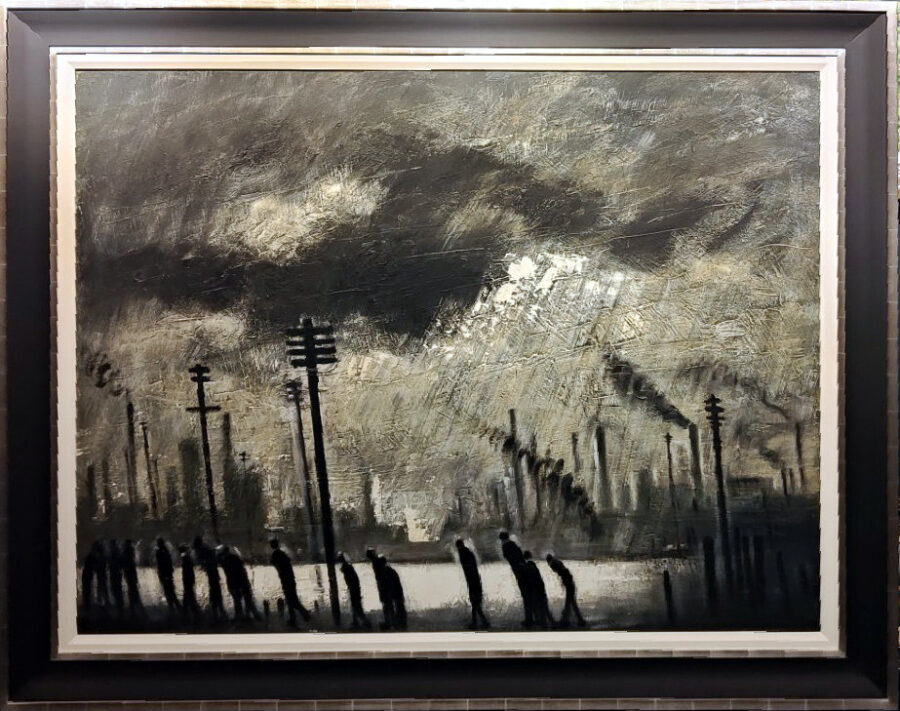
Last updated onTheodore Major (1908–1999) was an important British artist associated with what has become known as the Northern School, best known for his atmospheric depictions of industrial landscapes, urban streets, and working-class life in the North West of England. Based just outside of Wigan in Appley Bridge, Major developed a distinctive artistic voice that ran parallel to, and at times intersected with, that of L. S. Lowry, with whom he shared both a personal connection and a deep engagement with similar subject matter. Lowry was known to have visited Major’s home in Appley Bridge, arriving by train, and was a great admirer of his work. He is reported to have described Major as being a better than himself whose fame would have outshone his own had he been willing to promote his work in London for commercial gain.
Background and Early Career
Born in Wigan, Lancashire, Theodore Major trained at the Wigan Art School, where he developed strong technical foundations and a lifelong interest in landscape and industrial environments. From an early stage, Major was drawn to the industrial character of Northern England—mills, canals, streets, and the rhythms of everyday life—subjects that would remain central to his work.
Relationship with L. S. Lowry
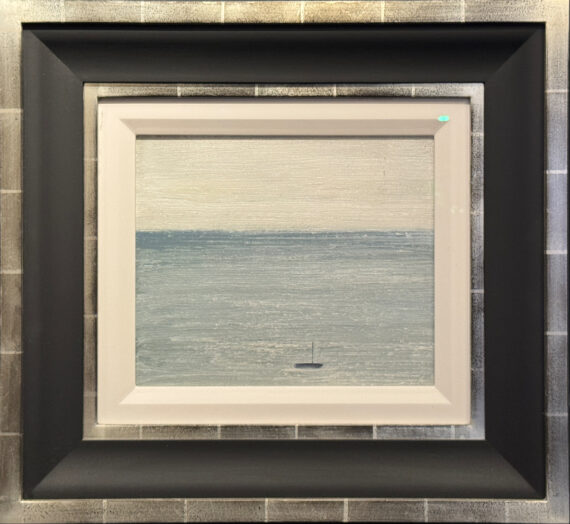 Theodore Major was a friend and contemporary of L. S. Lowry, and the two artists knew each other personally within Manchester’s artistic circles. Both painted similar territories—industrial streets, mills, and urban life and their work was exhibited alongside each other in life and subsequently. They both exhibited at the Mid-Day Studios, Manchester, in the 1940s as well as Salford Art Gallery in the mid to late 1950s where their works were offered at similar prices, circa £50 – £55 each. They have also enjoyed joint museum exhibitions since their deaths exhibiting at the Atkinson in Southport in an exhibition entitled ‘Two Lancashire Painters’.
While Lowry’s work is often characterised by stylised figures and simplified forms, Major’s paintings tend toward a more naturalistic and painterly realism, with particular sensitivity to light and atmosphere. Despite these stylistic differences, the two artists shared a mutual respect and a common commitment to documenting the character of the North.
Major’s proximity to Lowry—geographically, socially, and artistically—places him within the authentic Lowry milieu, rather than as a follower or imitator. His work provides an important complementary perspective on the same industrial world that
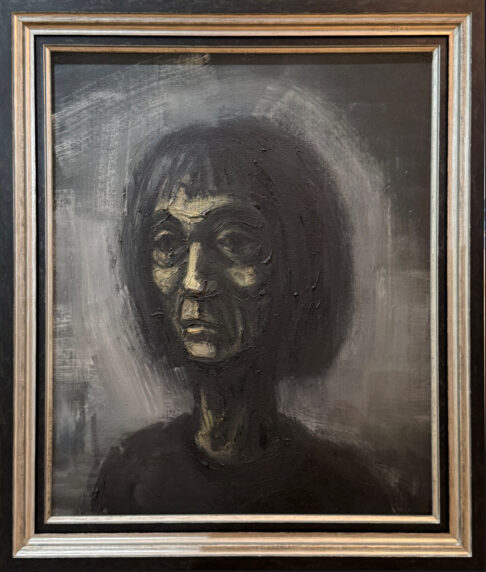
Lowry famously depicted, offering collectors and historians a broader, more nuanced understanding of Northern British art in the mid-20th century.
Major’s paintings often portrayed streets devoid of crowds, focusing instead on buildings, canals, and quiet urban spaces, imbuing them with mood and introspection. This restraint and atmospheric quality distinguish his work within the Northern realist tradition.
Theodore Major’s work is increasingly recognised by collectors of Northern British art, particularly those with an interest in artists associated with or working alongside L. S. Lowry. His paintings appeal to collectors who value authenticity, painterly quality, and historical context over overt stylisation.
Theodore Major occupies an important position in British art as a quietly independent voice within the Northern realist tradition. His friendship and shared context with L. S. Lowry anchor his work firmly within one of the most important movements in 20th-century British painting. Today, Major is recognised not only for his atmospheric urban landscapes but also as a key figure in understanding the wider artistic world in which Lowry worked.
View the current collection on our Theodore Major gallery page here and contact the gallery for full availability and viewing.