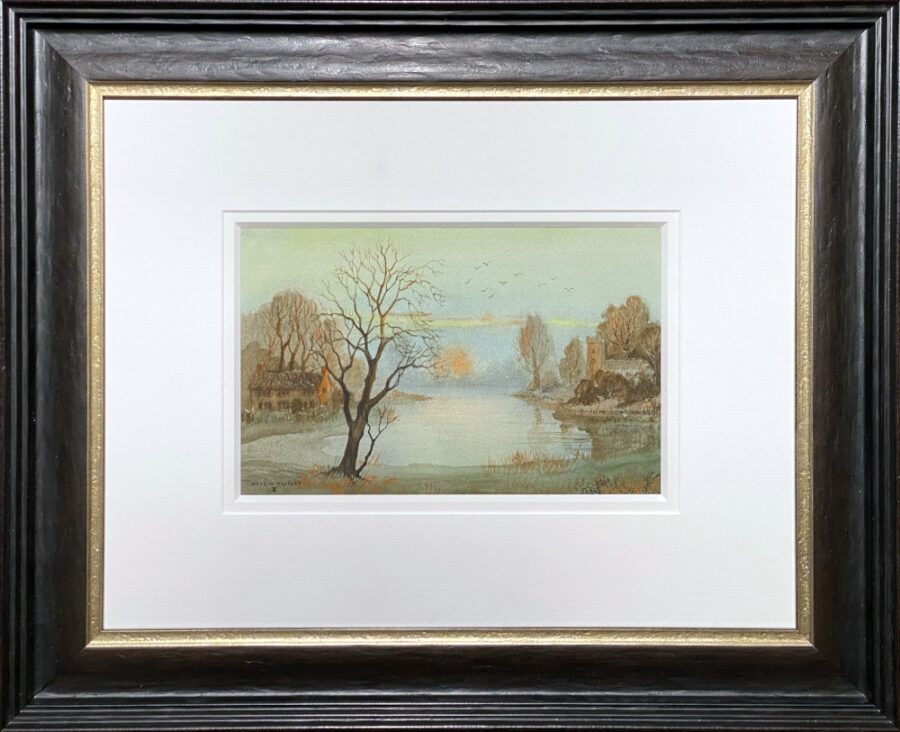

Helen Bradley and L S Lowry
Last updated onHelen Bradley (1900–1979) was a distinctive British naïve painter whose vividly detailed scenes of Edwardian and early 20th-century life have become an important part of the Northern English artistic tradition. Working largely from memory, Bradley created richly narrative paintings that captured the social fabric, rituals, and architecture of her youth. Although stylistically very different, her work shares a strong thematic and emotional affinity with L. S. Lowry, and she enjoyed a personal relationship with him that proved influential in the recognition and confidence of her artistic career.
Background and Artistic Development
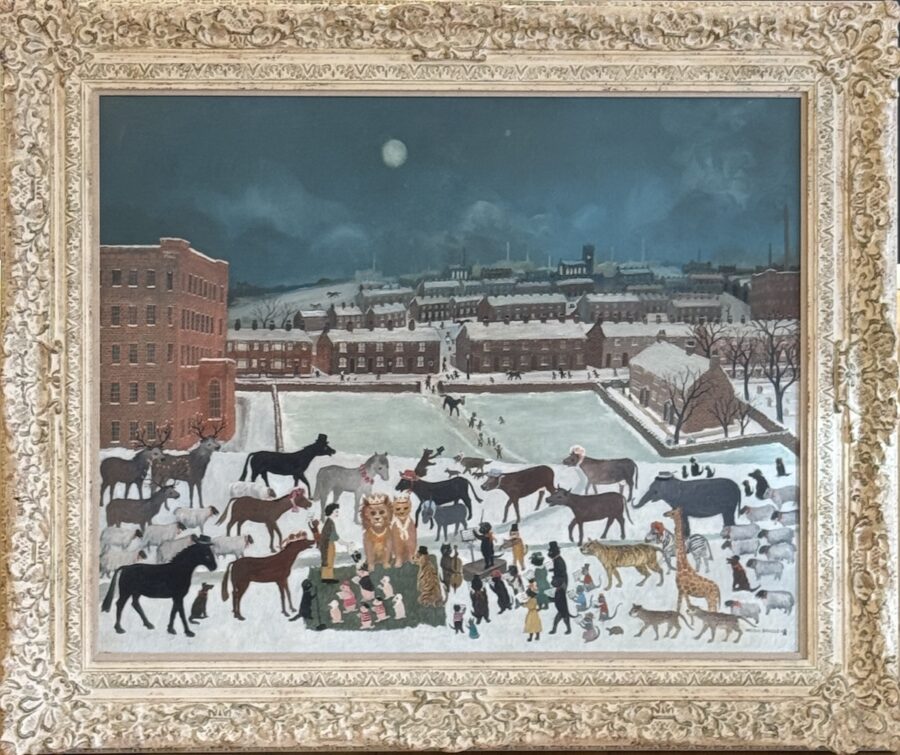
Born in Lees, Oldham, Lancashire, Helen Bradley spent her early life in the mill towns of the North West. She did not pursue formal art training and, unusually, did not begin painting seriously until her 60s. Drawing on childhood memories of Edwardian street life, Bradley developed a highly individual visual language characterised by flattened perspective, bright colour, and meticulously described detail.
Her paintings often depict schoolchildren, mill workers, parades, public events, and family outings, frequently including herself as a child alongside recognisable figures from her community. This autobiographical approach gives her work both charm and documentary value.
 Relationship with L. S. Lowry
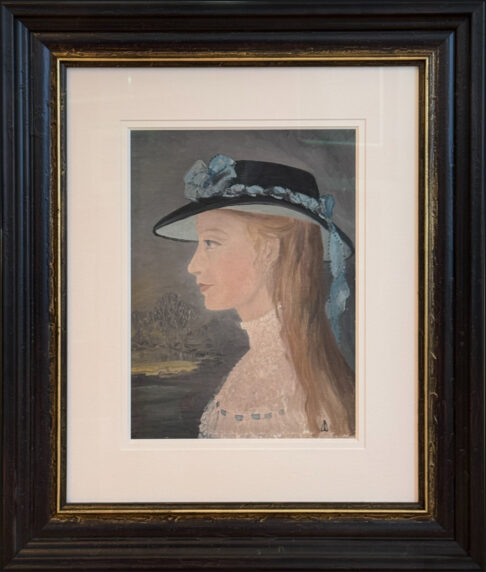
Helen Bradley had a direct personal connection with L. S. Lowry, whom she met later in life. Lowry took a genuine interest in Bradley’s work and was a significant source of encouragement at a critical moment in her artistic development. His approval and support helped validate her instinctive approach to painting and strengthened her confidence to continue.
Lowry’s influence on Bradley was not stylistic imitation but philosophical and thematic. Like Lowry, Bradley painted from memory rather than direct observation and focused on the everyday life of Northern communities. Both artists shared an interest in preserving social history—capturing a way of life that was rapidly disappearing.
Lowry admired Bradley’s honesty and narrative clarity, recognising in her work the same commitment to truth and personal vision that defined his own practice. This connection firmly situates Bradley within the broader Lowry-associated tradition of Northern storytelling in British art.
Artistic Recognition and Achievements
Bradley’s work gained public recognition in the 1960s, including a highly successful exhibition at The Royal Academy in 1966, which marked a major turning point in her career. Her paintings were widely exhibited and quickly attracted collectors drawn to their warmth, detail, and historical resonance.
Beyond painting, Bradley also published illustrated books recounting her childhood memories, further cementing her reputation as both an artist and a chronicler of Northern life. Her work is now held in numerous public collections and remains widely reproduced and admired.
Her documented relationship with L. S. Lowry adds significant historical depth and appeal for collectors of Northern British art. Bradley’s work is often seen as a complementary counterpart to Lowry’s—offering a more colourful, intimate, and personal perspective on the same social world.
Since her death, interest in Bradley’s work has remained strong and consistent, and she is one of the few artists from the Northern School whose works have truly broken into the London and international markets like as has L S Lowry. Today, her work stands not only as charming and distinctive but as an essential part of the wider narrative of Northern English art shaped by Lowry and his contemporaries.
View the current collection of Helen Bradley paintings by clicking here.